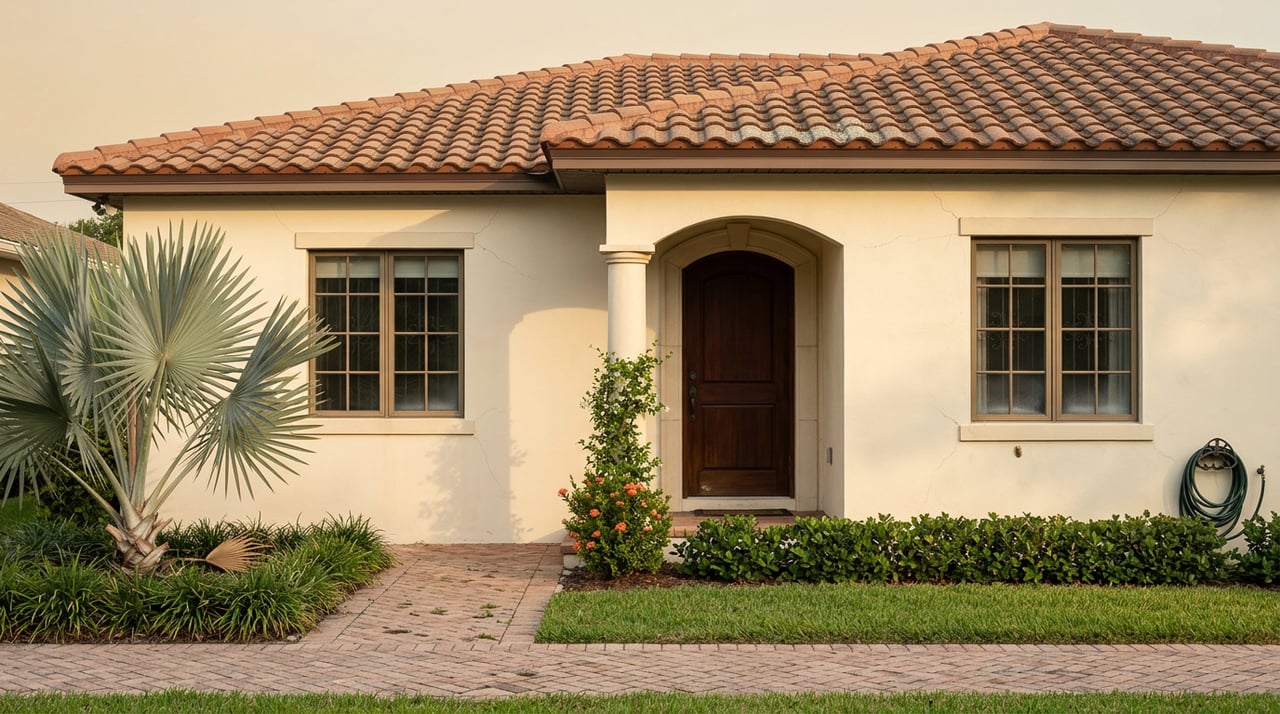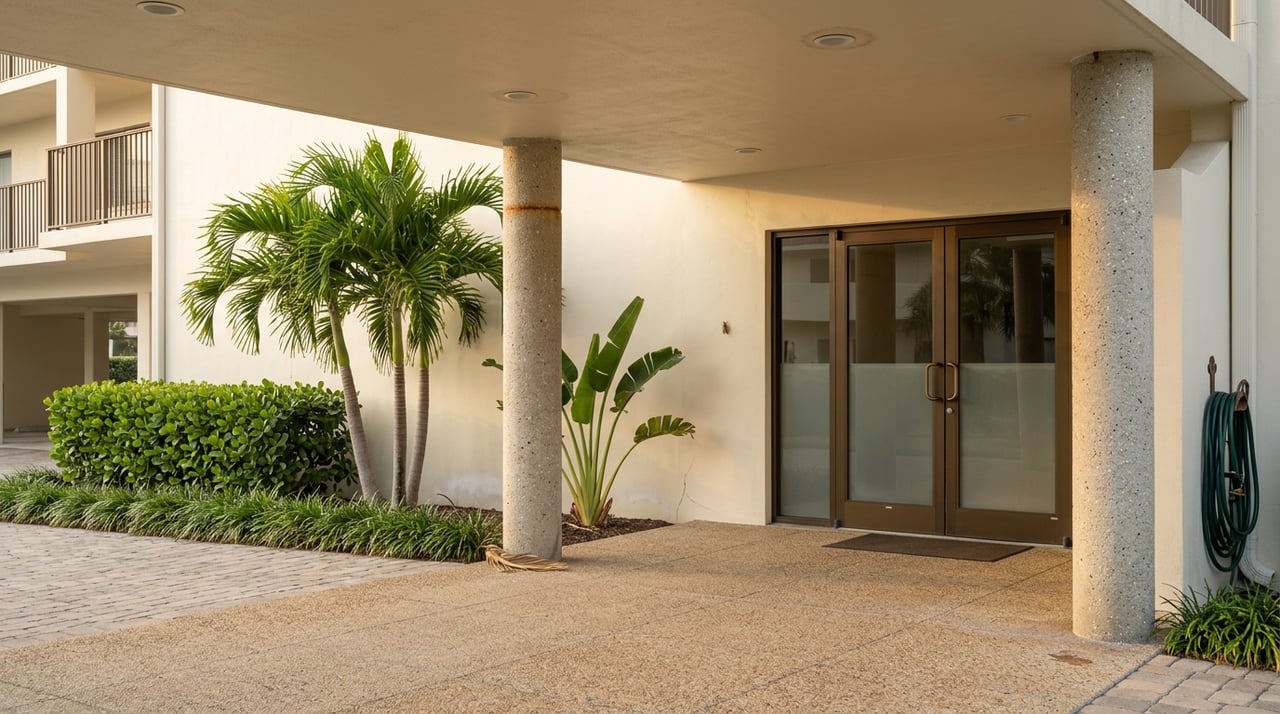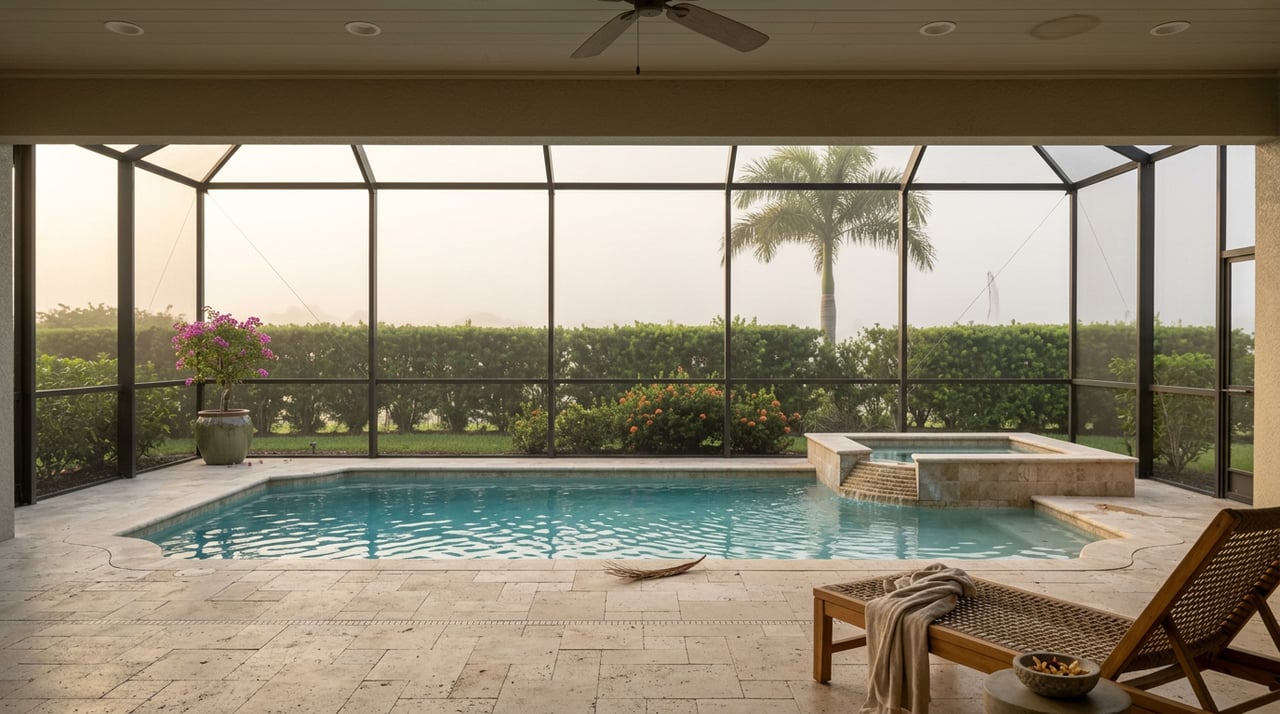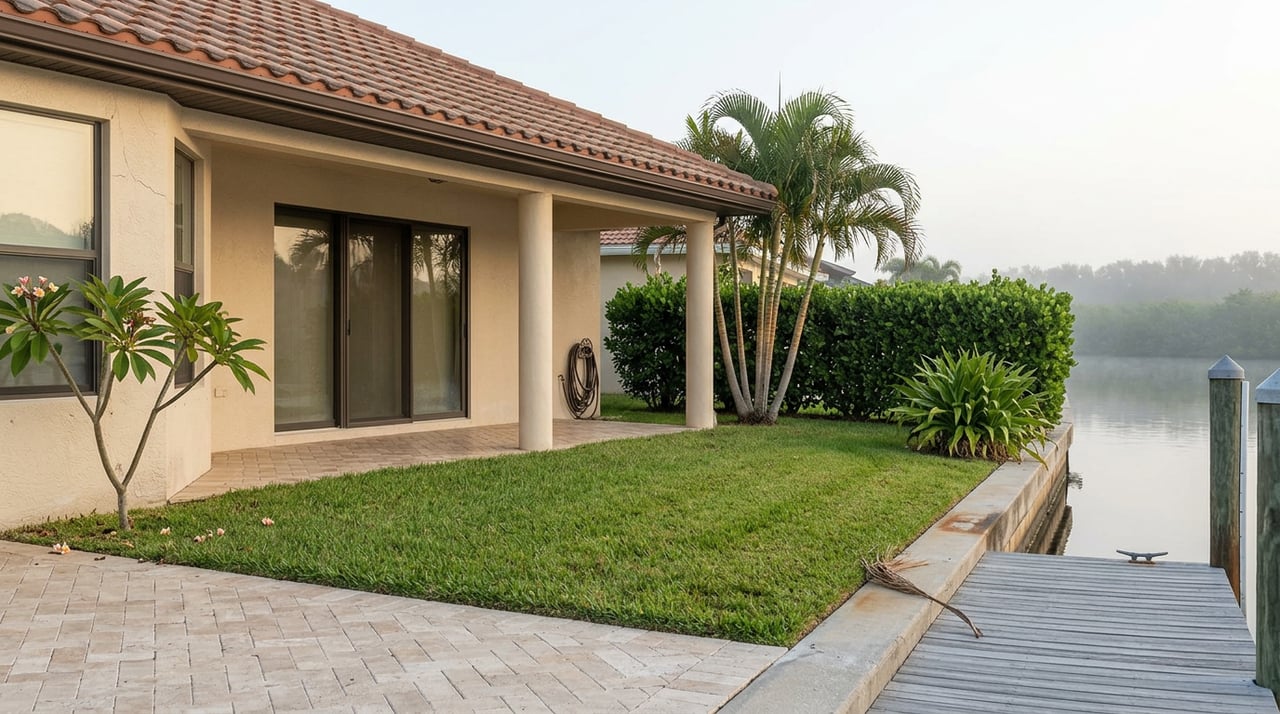
In 2019, at a public hearing that would end with Sarasota County commissioners voting to raise their own enforcement fines, Siesta Key Association director Joe Volpe described the house across the street from his home on Treasure Boat Way. It is rented every five to six days, he told commissioners, even though the county's rule for single-family neighborhoods caps rentals at once every 30 days. Down the block, another home advertised three-day stays.
Volpe wasn't describing a loophole. He was describing a boundary problem. Two houses can sit on the same Siesta Key street, look nearly identical from the sidewalk, and answer to entirely different rental laws, because the line that decides which rules apply isn't drawn by the beach, the price tag, or how the house looks. It's drawn by jurisdiction, then by zoning, then by whatever a condo or HOA board voted on years before you ever toured the property. Most buyers ask about the sand. Almost none ask which side of these lines they're standing on.
The First Line: City of Sarasota or Unincorporated County
Siesta Key feels like one place, but it isn't one jurisdiction. A small northern sliver of the island falls inside the City of Sarasota, while the rest sits in unincorporated Sarasota County. State Rep. Will Robinson made the point directly during a 2022 hearing on the island's incorporation push, noting he represents the northern section of Siesta Key that falls in the City of Sarasota.
That distinction matters because the two governments set different floors for how short you can rent. Inside city limits, the minimum stay is seven nights, and covered rentals need a Vacation Rental Certificate of Registration under Chapter 34.5 of the city code, a requirement the city commission voted to expand citywide on a 4-1 vote when it adopted Ordinance 24-5506 in February 2024. Outside city limits, in unincorporated county territory, the default flips to a 30-day minimum for residential zones.
The city didn't stop there. A 2025 update, Ordinance 25-5560, carried that registration and inspection framework further into 2026, tightening enforcement and adding clarity around owner-occupancy exemptions and pool safety requirements for properties still catching up to the 2024 rules. If your parcel sits on the city side of that invisible line, you're playing by one rulebook. A few hundred feet away, in the county, it's a different rulebook entirely.
The Second Line: RSF or RMF
Assume for a moment your parcel is on the county side, which is true for most of the island. The next question isn't whether you can rent short-term. It's whether your zoning district lets you.
Sarasota County's code splits residential land into Residential Single-Family (RSF) and Residential Multi-Family (RMF) districts. The default rule is unambiguous: in RSF zones, leases must run at least 30 days. A county flyer distributed at a Siesta Key Association meeting spelled it out in bold for residents confused about their own street, stating that in county districts zoned for Residential Single-Family homes, all leases must be at least 30 days.
RMF zoning is the exception, and on Siesta Key it clusters where you'd expect, around Siesta Village and the South Village commercial cores. County guidance shared at Siesta Key Association meetings confirms that those two areas are dominated by RMF zoning, where properties can sometimes be rented daily or on a three-day basis, unlike the RSF neighborhoods surrounding them.
But the boundary isn't perfectly tidy even inside RSF territory. SKA director Jean Cannon has pointed out that part of Canal Road, technically in a single-family area, is zoned to permit weekly rentals, an inconsistency that exists precisely because zoning maps get drawn parcel by parcel over decades, not neighborhood by neighborhood in one pass. You cannot assume a street's reputation tells you its zoning. You have to pull the parcel.
Layered on top of RSF and RMF is the Siesta Key Overlay District, created in 2001 to protect the island's character. SKOD adds its own standards on parking, impervious surface limits, and site design, and it explicitly bans bed-and-breakfast use anywhere on the island, regardless of base zoning. You can confirm any parcel's zoning and overlay status directly through Sarasota County's zoning code or the county's zoning overlay GIS dataset before you write an offer, not after.
| Where the parcel sits | Minimum stay | What's required |
|---|---|---|
| City of Sarasota (north tip of the island) | 7 nights | Vacation Rental Certificate of Registration, annual inspection |
| County, RSF zoning (most of the island) | 30 days | No short-term rental use permitted |
| County, RMF zoning (mainly Village and South Village) | Varies by parcel, often daily or 3-day minimums | Zoning verification plus SKOD compliance, DBPR license, county tax registration |
Why the County's 30-Day Rule Survived a Law Built to Wipe It Out
Florida is a preemption state on vacation rentals. State law generally bars counties and cities from banning short-term rentals outright or dictating their duration. Sarasota County's 30-day rule should have been swept away by that statute. It wasn't, because the rule predates the law's cutoff date. Ordinances adopted before June 1, 2011 were grandfathered in, and Sarasota County's measure cleared that bar.
County staff know how fragile that protection is. Planning and Development Services Director Matt Osterhoudt has cautioned Siesta Key Association members that county staff has to be very careful in making any change to the ordinance, so as not to see state leaders declare it null and void. One amendment drafted the wrong way could hand the county's own rule back to the legislature to overturn. That's part of why the rule has stayed rigid for years even as enforcement around it has gotten sharper.
What Enforcement Looks Like Now
That same 2019 hearing is where the stakes of getting the zoning line wrong stopped being modest. Sarasota County commissioners voted unanimously to raise the ceiling on code enforcement fines for illegal short-term rentals, moving from a prior cap of $250 per day for a first violation and $500 per day for a repeat violation up to $5,000 a day for violations a special magistrate finds irreparable or irreversible. That fine structure is still what's on the books today.
That escalation followed years of what residents nicknamed "hotel houses," a wave that started around 2018 when investors began buying barrier island homes, tearing them down, and rebuilding 8 to 12 bedroom structures marketed to sleep ten or more guests and run essentially as unlicensed hotels in residential zones. The pushback from island neighborhood groups eventually stabilized the number of vacation rentals operating on the barrier islands at roughly 135 to 140 houses, a number that has held as enforcement tightened.
The Siesta Key Association isn't a passive observer in any of this. The group actively coaches residents on documenting suspected violations, down to instructing them to gather hard evidence including a copy of a lease for less than 30 days or an online ad advertising less than 30-day rentals, and to log every complaint with the county call center for a tracking number. A county code enforcement officer has been assigned specifically to the Key since the fall of 2021. Both the city and county now run automated monitoring software that scans listing platforms for stays shorter than the legal minimum.
None of this means Siesta Key is hostile to short-term rentals. It means the properties where nightly and weekly rentals are legal are a defined, mapped subset of the island, not an assumption you get to make because the address says Siesta Key.
The Diligence List Before You Write an Offer
If rental income is part of your plan, work through this before you go under contract, not during due diligence when a deadline is already ticking.
- Confirm whether the parcel sits in the City of Sarasota or unincorporated county, since the answer changes your minimum stay before anything else matters.
- Pull the zoning designation, RSF or RMF, directly from the county's zoning code or GIS layer rather than trusting a listing description.
- If the parcel is on the barrier island, check for Siesta Key Overlay District standards that may limit parking, site coverage, or bed-and-breakfast use regardless of base zoning.
- For condos, request the full declaration, bylaws, and any rental amendments, since an HOA can restrict rentals more tightly than zoning allows, and Florida law generally protects existing owners from stricter rules passed after they bought while binding future buyers to them.
- Confirm state DBPR licensing requirements if you plan to rent more than three times a year for stays under 30 days, and register with the Sarasota County Tax Collector for the county's Tourist Development Tax, which combines with state sales tax for a total burden that typically lands near 13 percent of rental revenue.
- For any building three stories or taller, ask for the milestone structural inspection report and Structural Integrity Reserve Study, disclosure of which has been required in most Florida condo resales since the end of 2024.
- If you're financing a condo, have your lender check the project's status in Fannie Mae's condo eligibility system before you waive financing contingencies, since high investor concentration or unresolved litigation can make a building non-warrantable.
A Few Direct Answers
Does owning a condo on Siesta Key automatically mean I can rent it nightly? No. Zoning tells you what's legally possible on that parcel. The condo association's declaration tells you what's actually allowed for your unit, and it can be stricter than zoning permits.
Can an HOA impose rules stricter than the county's zoning code? Yes. County officials have said directly that when an association's rental restrictions are tighter than the county's, resolving the conflict becomes a civil matter between the owner and the association, not something the county will referee.
Is there talk of Siesta Key becoming its own town, and would that change these rules? A citizen-led incorporation effort has been in a self-described strategic pause since 2023, and no vote has moved it forward since. Until that changes, the county's existing rental ordinance and zoning code remain the operating rules on the island.
Where does the RMF exception actually cluster on the island? Mostly around Siesta Village and the South Village, though isolated exceptions exist elsewhere, which is exactly why parcel-level verification matters more than neighborhood reputation.
None of these lines are secret. They're recorded in county code and public GIS layers. But they're also easy to miss if the only research you do is scroll listing photos, and the cost of missing them ranges from a canceled booking to a five-figure fine. If you're weighing a Siesta Key purchase with rental income in the plan, Anthony LaPorta can walk the zoning, the association documents, and the compliance stack with you before you write the offer, not after. Explore current Siesta Key listings or reach out through the buyer resources page to start with the diligence, not the daydream.